Snowmelt and Spring Runoff Cleanup in Alpine, UT
Alpine gets mountain snowmelt, not coastal floods. The crews reach most of north Utah County to pull the water out and dry the cavity before mold follows.
(385) 503-2168Tap to call the 24/7 dispatch line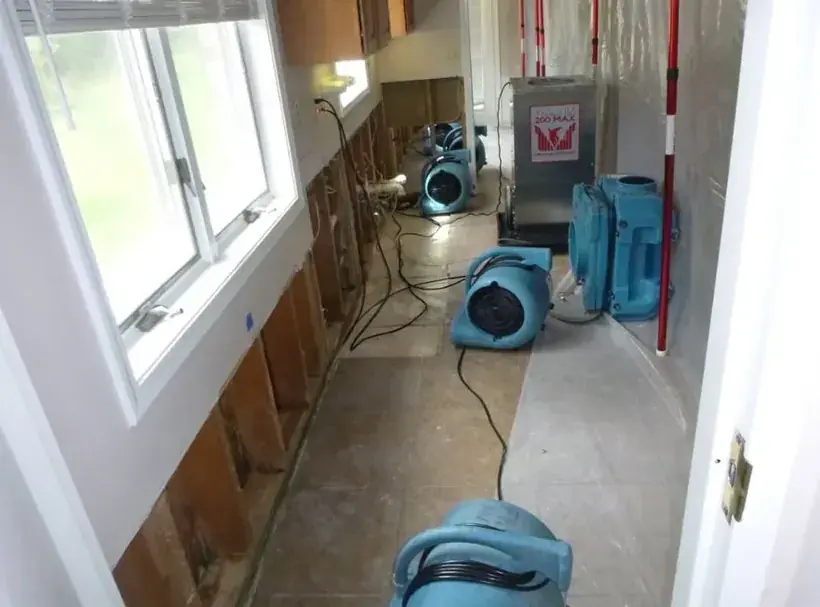
Alpine does not get hurricanes, it gets snowmelt. As the deep snowpack on Lone Peak, Box Elder Peak, and American Fork Canyon warms in spring, groundwater rises and runoff sheets off the benches into window wells, crawl spaces, and lower levels. It is slow, quiet water that returns to the same homes every spring. The Alpine water damage pros answer 24/7 and reach across north Utah County.
How snowmelt and spring runoff cleanup is handled in Alpine
Call and dispatch
The restoration team answers 24/7, and the nearest Alpine crew heads out with pumps, air movers, and moisture meters.
Assess and stop it
The crew finds the source and the full reach of the water, including what soaked into subfloor and wall cavities.
Extract and dry
The extraction crew pulls the standing water, then runs air movers and dehumidifiers to a verified dry standard, not just the surface.
Verify and document
Moisture readings are logged until the structure is dry, then the loss is documented with the photos and daily readings an adjuster needs to move a claim.
The water Alpine actually gets in spring
This is mountain groundwater, not a coastal flood, and it behaves differently:
- Snowpack off the high country raising the water table under bench neighborhoods
- Dry Creek, the American Fork River, and pressurized secondary irrigation lines add to the load
- Runoff sheets downhill off the benches toward low doors, wells, and driveways
- The water seeps in slowly over days, so the damage is often found late
You can follow the melt through the National Weather Service in Salt Lake City. From March into May, warm afternoons melt the high snow while nights still freeze, so the water table swells a little more each day. When the secondary irrigation system charges for the season, homes that stayed dry all winter find water at the lowest point.
Where spring runoff gets in
Runoff finds the low, unsealed points in a bench home:
- Window wells that fill faster than the drain can clear them
- Crawl spaces where ground water rises through the dirt or the vents
- Cold joints where the foundation wall meets the footing
- Low garage doors, walkout doors, and basement stairwells
Because the surface air here is dry, a wall can look fine while water sits trapped in the cavity and under the floor, and slow seepage through the wall itself is covered on the crawl space and foundation seepage page.
The snowmelt cleanup and cavity drying
Runoff water is usually clean, but caught late it soaks framing and flooring like any flood. In a crawl space it can sit on the vapor barrier for days, rotting the joists and subfloor above, so the crews treat the hidden spaces too. The crew works in order:
- 01Assess and find the source. The crews trace where the water is entering and map how far it has spread with meters.
- 02Extract the water. Pumps and extractors clear standing water from wells, crawl spaces, and lower levels, part of the water extraction service.
- 03Open and dry the cavity. Local crews dry inside walls, under floors, and in the crawl space, not just the surface, tied into the structural drying work.
- 04Treat to stop mold. Damp below grade materials get an antimicrobial treatment so mold does not follow the water.
- 05Document and bill. Dated photos, moisture logs, and a written scope go to your carrier, and local crews bill them directly.
Snowmelt coming into your lower level? Call now and a crew is on the way to dry the cavity, not just wipe the surface.
☎ Call (385) 503-2168Clear your window wells before the melt starts
Most spring runoff losses start at a window well that filled because its drain was clogged with leaves and grit. Clearing the wells and checking their covers before the melt is the cheapest flood prevention on a bench lot.
Insurance and getting the water out fast
Runoff and groundwater are handled differently by policies than a burst pipe, so documentation matters even more:
- The restoration crews photograph the entry point and water line, and log moisture readings until the cavity hits a dry standard
- The Alpine crews separate salvageable materials from what has to come out, in writing
- The local crews document the loss for your carrier and explain what your policy is likely to treat as covered
The Utah Division of Emergency Management has flood guidance for homeowners. The crews work the spring melt across Alpine, Highland, American Fork, Cedar Hills, and the rest of north Utah County, and heavy summer runoff is covered on the storm and canyon flood page.
Why north Utah County calls the local pros first
Rapid local response
The response team answers 24/7, and the nearest crew heads out the moment you call, day or night, across Alpine and north Utah County.
IICRC S500 drying standard
Trained crews with truck-mounted extractors, air movers, and moisture meters who dry to a verified standard, not a mop and a fan.
Claim-ready documentation
The loss is documented with photos and daily moisture readings, the paperwork an adjuster needs to move a claim.
North Utah County water experts
Hard-freeze and burst pipes, ice dams, snowmelt, and flooded basements, so the local pros know how water moves on the Alpine benches.
From Alpine to Lehi and across north Utah County
Covering Alpine and all of north Utah County, day or night.
The Alpine water damage pros cover all of north Utah County, day or night, with rapid local response.
Coverage runs across Alpine, Highland, American Fork, Cedar Hills, Lehi, Pleasant Grove, Lindon, Orem, Saratoga Springs, and Eagle Mountain.
See every neighborhood and ZIP covered ›Related restoration services
Alpine water damage questions, answered
Snowmelt is coming into my lower level, can you help?
Yes. Local crews extract the water from window wells, crawl spaces, and lower levels, then dry the cavity to a verified standard so it does not turn into mold. Call (385) 503-2168 and a crew reaches most of north Utah County.
Does insurance cover snowmelt or runoff?
Groundwater and surface runoff are treated differently than a burst pipe, and coverage depends on your policy and any flood endorsement you carry. The restoration crews document the loss thoroughly for your carrier, and tell you plainly what your policy is likely to cover.
Why does this happen every spring?
As the snowpack on Lone Peak and American Fork Canyon melts, the water table under the benches rises and runoff sheets downhill into the low, unsealed points of your home. The same window wells, crawl spaces, and cold joints take on water year after year until the entry point is fixed.
Can you dry the wall cavity, not just the surface?
Yes, and that is the whole point. Utah's dry surface air can leave a wall looking fine while water sits trapped in the cavity and under the floor. The Alpine crews find it with meters and dry the cavity, not just the drywall you can see.
How fast can you respond?
The local crews answer 24/7 and reach most of north Utah County. Runoff seeps in slowly, so the sooner you call the less it wicks up the wall and into the framing.
Which parts of north Utah County do you serve?
The crews work the spring melt across Alpine, Highland, American Fork, Cedar Hills, Lehi, Pleasant Grove, Lindon, Orem, Saratoga Springs, and Eagle Mountain. Call (385) 503-2168 and a local crew heads your way.
Is runoff water dangerous?
Clean snowmelt is low risk, but runoff that crossed lawns, streets, or irrigation can pick up contaminants, and water that sat for days grows bacteria and mold. Local crews check the category and treat below grade materials with an antimicrobial so the cleanup is not just cosmetic.
Can I stop this before next spring?
Often, yes. Clearing and covering window wells, keeping the drains open, grading soil away from the foundation, and sealing cold joints all help. After the restoration crews dry you out the Alpine crews point you to the fixes that match how the water was getting in.
A local Alpine crew is standing by
Water sitting means damage spreading. Call Lund Disaster Relief and a local crew heads out across north Utah County, day or night.
(385) 503-2168Call now, a local crew picks up day or night