Water Extraction and Removal in Alpine, UT
Nothing dries until the standing water is gone. The crews reach most of north Utah County with truck mounts and pumps to pull the water out fast.
(385) 503-2168Tap to call the 24/7 dispatch line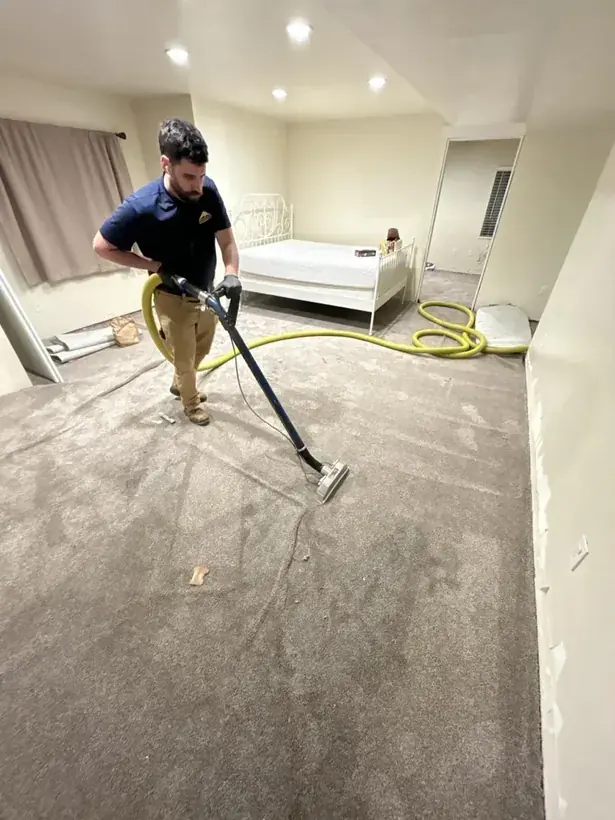
Water extraction is the first step on almost every water damage job, because nothing dries until the standing water is gone. Whether it came from a burst pipe, a failed sump, snowmelt, or a storm, the clock starts the moment water hits the floor. The Alpine water damage pros answer 24/7 and reach across north Utah County with truck mounted extractors, submersible pumps, and portable units to pull the water out fast.
How water extraction and removal is handled in Alpine
Call and dispatch
The restoration team answers 24/7, and the nearest Alpine crew heads out with pumps, air movers, and moisture meters.
Assess and stop it
The crew finds the source and the full reach of the water, including what soaked into subfloor and wall cavities.
Extract and dry
The extraction crew pulls the standing water, then runs air movers and dehumidifiers to a verified dry standard, not just the surface.
Verify and document
Moisture readings are logged until the structure is dry, then the loss is documented with the photos and daily readings an adjuster needs to move a claim.
The extraction process
Extraction is a measured process that decides how much of the structure survives:
- The crews stop the source, then check for electrical and slip hazards
- Local crews map the water with moisture meters so nothing wet gets missed
- The restoration crews extract with the right tool for the space and the volume
- The Alpine crews hand off to structural drying with a plan for the cavities and materials
Every hour of standing water is more material lost and more risk of mold.
Where standing water hides in Alpine homes
The water you can see is rarely all of it. In north Utah County homes it hides where dry air never reaches:
- Finished basements, where water runs to the lowest, most finished space, covered on the basement flooding page
- Crawl spaces, where it pools on the vapor barrier and soaks the framing above
- Under laminate, engineered, and floating floors, trapped against the subfloor
- Inside wall cavities and under cabinets, wicking upward out of sight
Altitude works against you here. The dry mountain air makes a floor feel dry within hours, which fools homeowners into thinking the problem is over, while water in the subfloor and bottom plate keeps wicking behind the baseboards. A moisture meter tells the real story, usually wetter and wider than it looks. You can check your property's flood exposure through the FEMA Flood Map Service Center.
Clean, grey, and black water, and why it matters
The category of the water decides what can be saved:
- Clean water from a supply line or melt often lets the crews save flooring and drywall if the crews reach it fast
- Grey water from an appliance or backup carries contaminants and limits what stays
- Black water from sewage or a storm is a health hazard, so porous materials come out
Sewage and storm water get the containment and disinfection covered on the sewage and black water and storm and canyon flood pages. Whatever the category, extraction comes first:
- 01Assess and make safe. The local crews confirm the source is stopped and check for hazards near the water.
- 02Moisture map. Meters and thermal imaging show where the water spread, under floors and in walls.
- 03Extract. Truck mounts, submersibles, and portable extractors clear every affected space.
- 04Remove the unsalvageable. Soaked pad and materials that cannot be dried in place come out.
- 05Hand off to drying. The crews set air movers and dehumidifiers and monitor daily until the structure is verified dry.
Standing water in your home? Call now and a crew heads across north Utah County with pumps and extractors to get it out fast.
☎ Call (385) 503-2168Every hour of standing water costs you more materials
In the first day water wicks up drywall, swells hardwood, and delaminates flooring, and after 24 to 48 hours mold enters the picture. Fast extraction is the cheapest step in the whole job, because it decides how much has to be replaced later.
Why fast extraction matters, and your claim
Time is damage:
- Standing water spreads under floors and into walls the whole time it sits
- Wet framing and drywall can grow mold within 24 to 48 hours
- The EPA mold guidance is clear that fast drying is the best defense
- The loss is documented for your carrier, so the paperwork is not on you
Extraction leads straight into drying, so local crews handle both without a handoff to another company. Local crews extract water across Alpine, Highland, American Fork, Cedar Hills, Lehi, Pleasant Grove, and the rest of north Utah County.
Why north Utah County calls the local pros first
Rapid local response
The response team answers 24/7, and the nearest crew heads out the moment you call, day or night, across Alpine and north Utah County.
IICRC S500 drying standard
Trained crews with truck-mounted extractors, air movers, and moisture meters who dry to a verified standard, not a mop and a fan.
Claim-ready documentation
The loss is documented with photos and daily moisture readings, the paperwork an adjuster needs to move a claim.
North Utah County water experts
Hard-freeze and burst pipes, ice dams, snowmelt, and flooded basements, so the local pros know how water moves on the Alpine benches.
From Alpine to Lehi and across north Utah County
Covering Alpine and all of north Utah County, day or night.
The Alpine water damage pros cover all of north Utah County, day or night, with rapid local response.
Coverage runs across Alpine, Highland, American Fork, Cedar Hills, Lehi, Pleasant Grove, Lindon, Orem, Saratoga Springs, and Eagle Mountain.
See every neighborhood and ZIP covered ›Related restoration services
Alpine water damage questions, answered
How fast can you extract water?
The restoration crews answer 24/7 and reach most of north Utah County with truck mounted extractors, submersible pumps, and portable units. Because standing water spreads the whole time it sits, call (385) 503-2168 the moment you see it.
Do you remove water from a flooded basement or crawl space?
Yes. Those are the hardest spaces to reach and the most common, so the restoration crews bring submersible pumps for standing water and extractors for what is soaked into floors and pooled on a crawl space vapor barrier. Below grade water is where speed matters most.
What is clean vs grey vs black water?
Clean water comes from a supply line or melt and, caught fast, often lets the crews save flooring and drywall. Grey water from an appliance or backup carries contaminants and limits what stays. Black water from sewage or a storm is a health hazard, so porous materials come out. The category sets the whole plan.
How soon does mold start?
Mold can take hold in wet framing and drywall within 24 to 48 hours, which is why fast extraction and drying are the best defense. The longer water sits, the more material is lost and the higher the mold risk climbs.
Will insurance cover extraction?
Extraction is a standard part of a covered water loss, and coverage tracks the source of the water. The Alpine crews document the loss with dated photos, readings, and a written scope for your carrier, so you generally pay only your deductible.
What happens to soaked carpet and flooring?
It depends on the water category and how long it sat. Clean water caught fast often lets the crews float and dry carpet in place, while soaked pad, and flooring hit by grey or black water, usually come out. The local crews document what is saved and what is removed for your claim.
Do you dry the home after extracting?
Yes. Extraction and drying are one continuous job, not a handoff to another company. Once the standing water is out the Alpine crews set air movers and dehumidifiers and monitor daily until the structure is verified dry.
Which areas do you serve?
The crews extract water across Alpine, Highland, American Fork, Cedar Hills, Lehi, Pleasant Grove, Lindon, Orem, Saratoga Springs, and Eagle Mountain, and the rest of north Utah County. Call (385) 503-2168 and a local crew heads your way.
A local Alpine crew is standing by
Water sitting means damage spreading. Call Lund Disaster Relief and a local crew heads out across north Utah County, day or night.
(385) 503-2168Call now, a local crew picks up day or night