Sump Pump Failure Cleanup in Alpine, UT
When the pump quits in a storm, the pit overflows and the basement fills. The crews reach most of north Utah County to pump it out and dry it down.
(385) 503-2168Tap to call the 24/7 dispatch line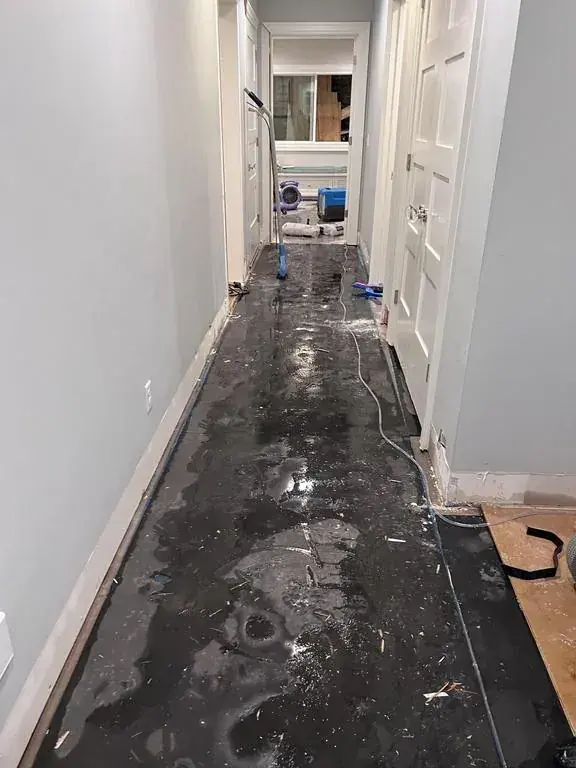
A sump pump is the one machine between a high water table and your finished basement, and it usually fails at the worst moment, during a spring storm or a fast melt. When it quits, the pit overflows and the basement fills. The broader below grade flood is covered on the basement flooding page. The Alpine water damage pros answer 24/7 and reach across north Utah County.
How sump pump failure cleanup is handled in Alpine
Call and dispatch
The restoration team answers 24/7, and the nearest Alpine crew heads out with pumps, air movers, and moisture meters.
Assess and stop it
The crew finds the source and the full reach of the water, including what soaked into subfloor and wall cavities.
Extract and dry
The extraction crew pulls the standing water, then runs air movers and dehumidifiers to a verified dry standard, not just the surface.
Verify and document
Moisture readings are logged until the structure is dry, then the loss is documented with the photos and daily readings an adjuster needs to move a claim.
When the pump quits, the basement fills
A sump pit that stops keeping up backs up fast, and the first signs are easy to miss:
- A pump running constantly, or not running at all, during a melt or storm
- Water rising in the pit instead of dropping after the pump cycles
- A damp smell or a wet edge along the basement floor near the pit
- The float switch stuck up or down against the pit wall
By the time water is on the floor, the pit has already lost the race. Catching a struggling pump early saves a flooded basement.
Why sump pumps fail on the benches
The failures here cluster around a few causes:
- Power loss in a spring storm, exactly when snowmelt is pushing the water table up
- A single pump with no backup, overwhelmed by a heavy, fast snowmelt off the mountains
- A stuck or failed float switch, or a pump motor that simply wore out
- A frozen or clogged discharge line that sends the water right back to the pit
Homes on high water table bench lots across Alpine, Highland, and Cedar Hills often run one pump with no second line of defense, tracked against local storms at Ready.gov floods. You can look up your lot's flood exposure at the FEMA Flood Map Service Center. A pump can sit untested for years and still look fine, because it only has to work on the few nights the melt peaks or a storm blows through, exactly when the power is most likely to blink.
The pump out and dry down
When a pit overflows the water is usually clean, but it spreads under flooring and into walls like any flood. The crew works in order:
- 01Make safe and assess. The crews check power to the wet area, confirm whether the pump can be restarted, and map the water.
- 02Pump and extract. Backup pumps and truck mounted extractors clear the standing water fast, tied into the water extraction service.
- 03Pull the wet materials. Soaked pad and any wicked drywall come out so the cavity can dry instead of growing mold.
- 04Dry to a standard. Air movers and dehumidifiers dry the slab, framing, and walls, with daily readings, part of the structural drying work.
- 05Advise on backup. Local crews document the loss for your carrier, and point you to the backup that fits your basement.
Sump pump failed and water rising? Call now and a crew is on the way to pump it out and dry it down.
☎ Call (385) 503-2168A battery backup pays for itself the first time the power blinks
A battery backup pump, or a second pump on its own circuit, keeps the pit clear when a storm cuts the power. After the crews dry you out, local crews will show you the simplest setup for your basement.
Stopping the next failure, and your claim
Once you are dry, a few upgrades take the risk down for good:
- Add a battery backup pump, and a second primary pump on high water table lots that see fast melt
- Keep the discharge line clear and pitched so it drains away from the house
- Test the pump before every spring melt and replace it on schedule
Insurance treatment of a sump failure varies by policy and any backup rider you carry, so the restoration crews document everything for your carrier. The restoration crews keep pumps and drying gear ready through the melt season across Alpine, Lehi, Saratoga Springs, and the rest of north Utah County.
Why north Utah County calls the local pros first
Rapid local response
The response team answers 24/7, and the nearest crew heads out the moment you call, day or night, across Alpine and north Utah County.
IICRC S500 drying standard
Trained crews with truck-mounted extractors, air movers, and moisture meters who dry to a verified standard, not a mop and a fan.
Claim-ready documentation
The loss is documented with photos and daily moisture readings, the paperwork an adjuster needs to move a claim.
North Utah County water experts
Hard-freeze and burst pipes, ice dams, snowmelt, and flooded basements, so the local pros know how water moves on the Alpine benches.
From Alpine to Lehi and across north Utah County
Covering Alpine and all of north Utah County, day or night.
The Alpine water damage pros cover all of north Utah County, day or night, with rapid local response.
Coverage runs across Alpine, Highland, American Fork, Cedar Hills, Lehi, Pleasant Grove, Lindon, Orem, Saratoga Springs, and Eagle Mountain.
See every neighborhood and ZIP covered ›Related restoration services
Alpine water damage questions, answered
My sump pump failed, can you pump it out and dry it?
Yes, that is the core of this service. The Alpine crews bring backup pumps and extractors to clear the overflow, pull the soaked pad, and dry the slab and walls to a verified standard. Call (385) 503-2168 and a crew reaches most of north Utah County.
Why did my pump fail?
The most common reasons here are a power loss in a storm right as the water table peaks, a single pump overwhelmed by a fast melt, a stuck or worn float switch, or a frozen or clogged discharge line. The local crews identify which it was so the fix actually prevents the next one.
Should I add a battery backup or a second pump?
On a high water table bench lot, yes. A battery backup keeps the pit clear when a storm cuts the power, and a second primary pump handles a melt that overwhelms one pump. After the Alpine crews dry you out the local crews will show you the simplest setup for your basement.
How fast can you respond during a storm?
The crews answer 24/7 and reach most of north Utah County, and the crews keep pumps and drying gear ready through the melt and storm season. Call (385) 503-2168 the moment you see the pit losing the race.
Will insurance cover a sump pump failure?
It depends on your policy and whether you carry a sump or water backup rider, since a standard policy may not include it. Local crews document the loss fully for your carrier, and tell you plainly what your coverage is likely to include.
Can you save what was stored down there?
Often, if it is not porous and local crews reach it fast. The restoration crews move stored items up out of the water, dry what can be dried, and document what cannot be saved for your claim. Boxes and soft goods that sat in the water usually do not survive.
How long does drying take?
Most basement dry outs take three to six days, depending on how much water got in and how long it sat. The Alpine crews monitor moisture daily and only call it done when the readings confirm the structure is dry, not just dry on the surface.
My pump runs constantly, is it about to fail?
A pump that runs nonstop is either undersized for the water it is fighting or starting to wear out, and it is a warning worth acting on before the next storm. Have it checked, and consider a backup, so a heavy melt does not catch you with one tired pump.
A local Alpine crew is standing by
Water sitting means damage spreading. Call Lund Disaster Relief and a local crew heads out across north Utah County, day or night.
(385) 503-2168Call now, a local crew picks up day or night